
1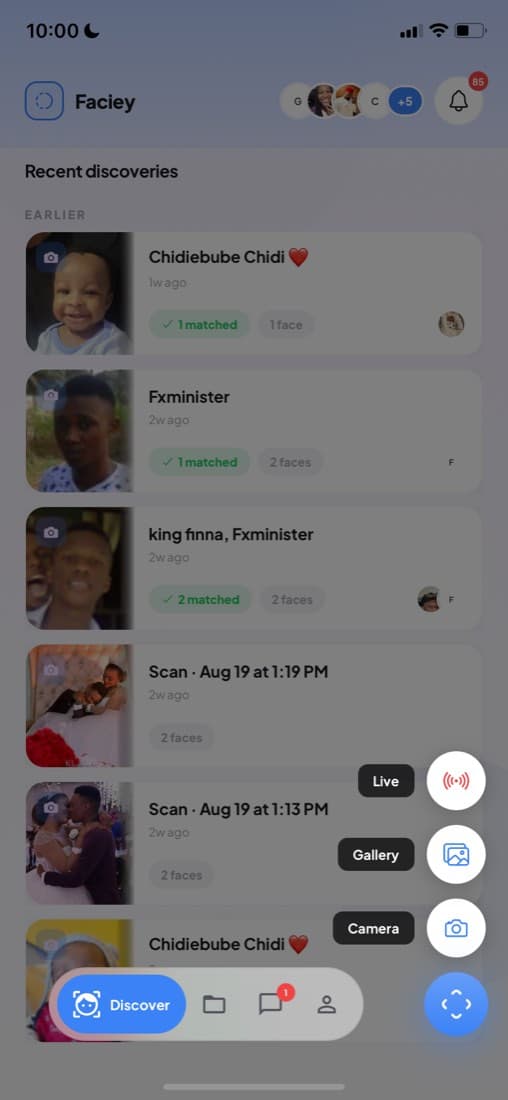
Point
Take a photo, pick one from your gallery, hand over a video, or open the live camera. Whatever you happen to have.
How it works
Faciey has two halves that need each other: people who add their face so they can be found, and people who scan a face to find them. Here is exactly what happens on both sides.
Finding someone
Take a photo, pick one from your gallery, hand over a video, or open the live camera. Whatever you happen to have.
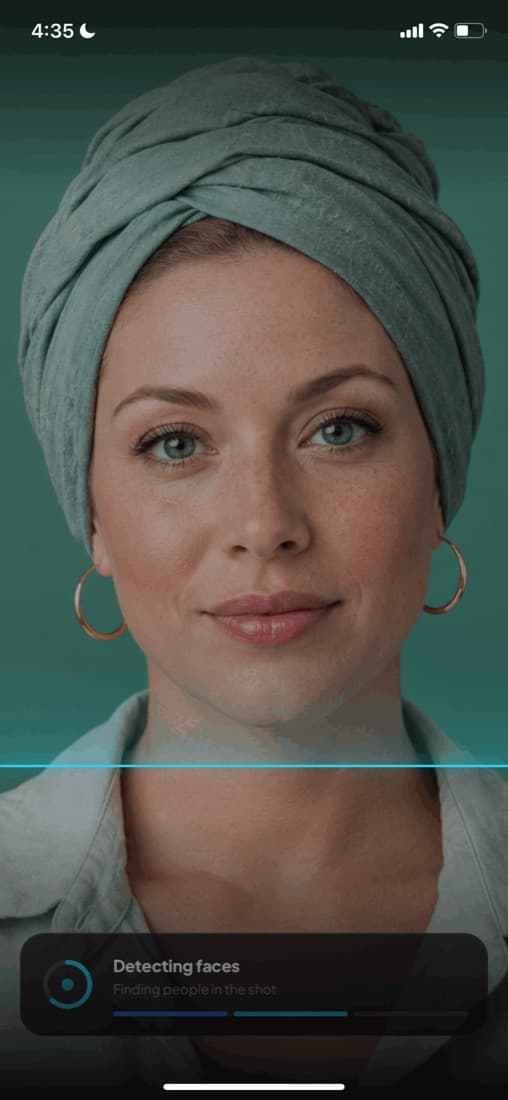
Every face is detected, turned into a faceprint and compared against people who chose to be findable. Each match comes back with how close it was.
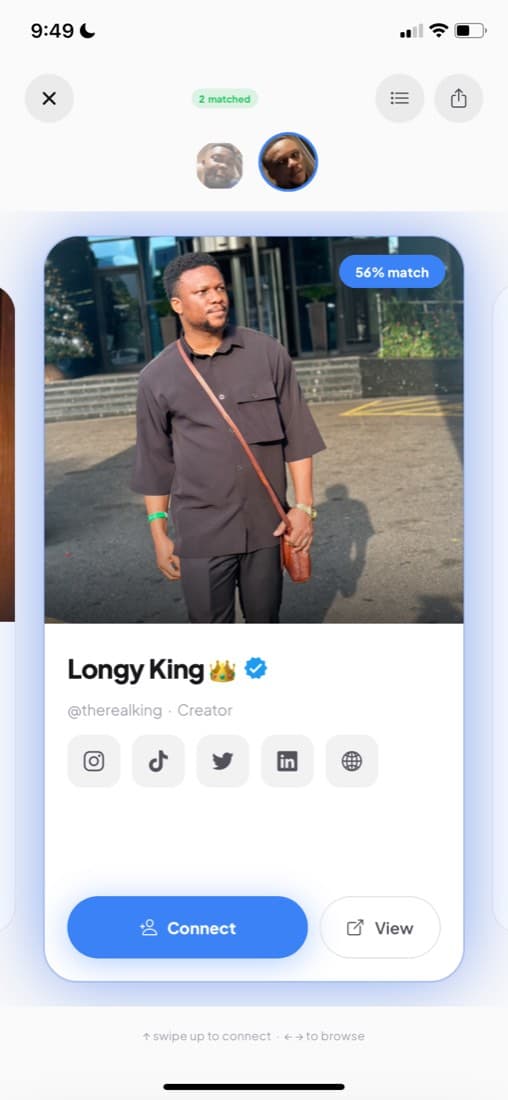
Name, verified badge, bio and every social handle they publish — in one card, in their order.
Being found
Nobody can be found who did not put themselves there. Adding your face is a minute of work, once, and it is what turns every photo of you into a route back to your accounts.

Under the hood
A scan does not store your photograph and compare pictures. Each detected face is converted into a faceprint — a list of numbers describing the geometry of that face — and it is those numbers that get compared. Two photos of the same person taken years apart produce similar numbers; two different people do not.
A match is therefore a similarity score, not a certainty, which is why every result shows you how close it was rather than pretending to be sure. On a web scan the faceprint is held for an hour so the result page keeps working, and then deleted. The photo you uploaded is not kept at all.
All four ways in
Camera or gallery, including screenshots and group shots.
Photo scanTrim to the seconds that matter and get the distinct faces out.
Video scanPoint it at a room and cards surface as people come into frame.
Live scanThe same match, with nothing installed and no account.
Web scannerIt detects every face in the image, converts each one into a faceprint, and compares those against the faceprints of people who signed up and switched discoverability on. Matches come back with a similarity score and the profile behind the face.
About two seconds for a photo. A video takes roughly twelve seconds for a ten-second range, because only the part you trimmed to is read.
Yes. Anyone whose face matches is told that their face appeared on a scan, with how close the match was and when it happened.
No. There is no scraped database. If the person is not on Faciey, the face comes back unmatched — and you can ask to be told the day they join.
It is used for the scan and not kept. On the web the resulting faceprint is held for an hour so your result page keeps working, then deleted.
Scan a face on the web right now, or take a minute and become one of the faces that can be found.